20 Recommended Pieces Of Advice For Picking Floor Installation
Wiki Article
The Nail Down Is A Variant Of. Glue Down Vs. Floating Hardwood Explained
If you ask three flooring contractors in Philadelphia what the proper way for hardwood to be installed and you might get three different responses -- not because all of them are incorrect, but rather because the correct installation method genuinely is based on the unique circumstances of your house. The subfloor type, the levels of the floor, wood species, the conditions of moisture and your long-term goals for your space all factor into the choice. Most homeowners discover this after the fact which is why you should know the distinctions before you begin getting estimates. Here's how each method actually is used and when it is appropriate.
1. Nail-Down is the Standard for Solid Hardwood
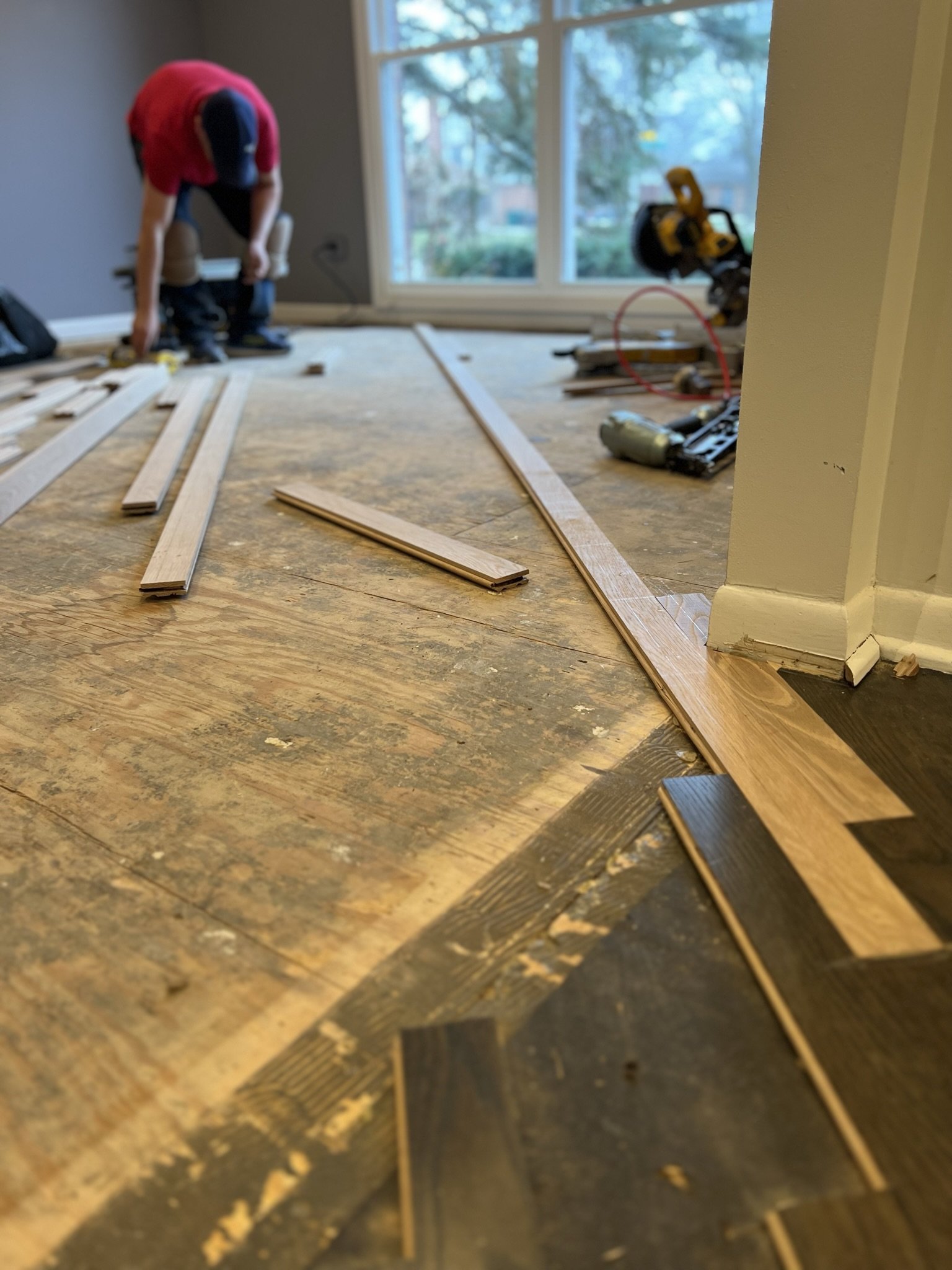
Nail-down, also referred to as staple-down fixing each hardwood plank to the wood subfloor with the pneumatic nailer. This is the oldest method of installation and is the most frequent option for installing solid hardwood in Philadelphia houses with the plywood and OSB subfloors. The nail is solid, the floor feels solid beneath your feet and there's nothing to fail over time. The majority of flooring contractors opt to nail-down solid hardwood on subfloors that are above grade without hesitation.
2. Your subfloor can determine if nailing down is a viable option at all.
Nail-down hardwood requires a wood subfloorand a full stop. Concrete slabs, that are found in basements, and even some ground-floor zones of Philadelphia homes and Delaware County ranches, cannot be used with staples or nails in any way. If your subfloor has concrete nail-down is off the plan, no matter what flooring material you'd like. A professional flooring installer who is licensed can know this in the first visit to the site. An unexperienced one might not know until after the work has begun.
3. Glue-Down Opens Up Concrete Slab Installations
Glue-down hardwood installation is the full-spread type of adhesive that is applied to the subfloor before planks are installed. This is the preferred option when it's necessary to have real hardwood installed over concrete -for basements within Montgomery County colonials, ground-floor slabs found in newer South Jersey construction, or any area where nail-down isn't an option. When it's done correctly a glue-down floor is extremely rigid and has minimal flex. The downside is that removal from the floor is considerably more time-consuming as compared to removing a nailed and floating flooring.
4. Floating Hardwood Isn't Connected to Subfloor at all
Floating installation suggests that the planks are locked at their edges. They sit on the subfloor's surface like one connected surface, moving together, rather than being fixed in place. It's less difficult to set up, easier to get rid of, and more flexible to floor imperfections than nail-down. Engineered hardwood is a popular option for floating installations in Philadelphia because its layered construction handles the slight movement that comes with a floating more effectively than solid wood.
5. Floating floors have a distinct sensation underfoot
It's something that showroom visits aren't always able to convey. It's not uncommon for floating hardwood to have a slight touch when you walk on the floor. It's not striking but noticeable in comparison to the nail-down flooring which is tied close to the subfloor. For most homeowners it's a simple matter. For some, particularly those who want to upgrade from nail-down hardwoods, there is an adjustment. If you're worried think about it, ask your flooring professional whether you could walk by a sample of the floating floor prior to you commit.
6. Nail Down is the laboriest The Three Costs of Nail-Down
From a strict installation perspective nailing down hardwood requires the longest time and requires the most skill and is evident in the estimates for labor you'll receive from Philadelphia flooring contractors. The floor must be neat, flat, and properly thick. The planks must be properly acclimated. Nailers require careful technique in order to avoid splitting. Flooring installers who do nail-down successfully are earning themselves a salary. If you come across a inexpensive hardwood installation estimate, it's worth asking specifically what they're going to do to fix it.
7. It is expensive to make gluing but is a good way to save some labor Variables
Adhesive isn't cheap, and glue-down tasks require the right product matched to the hardwood and subfloor combination. In the end, glue-down construction over a well-prepared concrete slab may be quicker than nailing over subfloors that need repairs of a significant amount. Flooring contractors throughout Bucks County and Delaware County frequently suggest glue-down installation for engineered wood for slab-on floors especially because it can combine real wood beauty with practical benefits.
8. Moisture Testing should be conducted prior to Any Method is Picked
This step is usually skipped when doing budget projects, which can lead to problems within the year. Concrete slabs are known to emit moisture-vapor when they are wet, and the excess moisture can cause glue-down adhesive to break as floating floorings break. Wood floors in older Philadelphia rowhomes can be subject to an elevated level of moisture from crawlspaces, or poor ventilation. A proper moisture reading before installation isn't required -this is how a reputable flooring professional determines which approach is safe as well as what prep work must be done prior to.
9. Refinishing Compatibility is a matter of method.
Solid wood that has been nail-down is able to be sanded a few times during its lifetimethis is one of the most compelling reasons to choose it despite the higher price of installation. A glue-down engineered wooden floor can typically be finished either once or twice based on the wear layer thickness. The floating engineered hardwood could contain a few refinishing possibilities. If long-term floor maintenance is part of your plan it is important to take into account this strategy before you install, not later.
10. The most effective method is A Site Choice, Not a Preference A Decision
Homeowners often come to flooring consultations with an idea of which method they would like to use. Experienced flooring installers in Philadelphia can help guide that discussion towards what the particular residence actually allows. The most reputable flooring professionals aren't trying to promote a particular technique -they're analyzing the subfloor, your humidity levels, your floor level, along with your wood species, and then recommending the best option. This type of site-specific analysis is what separates licensed professionals from someone who just owns a nailer. Have a look at the most popular
floating hardwood floor installation Philadelphia for site advice including luxury vinyl plank installation Philadelphia, subfloor repair Philadelphia, flooring installation Montgomery County PA, luxury vinyl plank installation Philadelphia, flooring contractors Bucks County, hardwood floor installation Philadelphia, hardwood floor installation Bucks County, engineered hardwood installation Philadelphia, vinyl plank flooring Philadelphia PA, vinyl plank flooring Philadelphia PA and more.

Serves Bucks, Montgomery & Delaware County The Bucks, Montgomery And Delaware County Service: What To Know
Homeowners living in the Philadelphia suburbs generally assume that flooring companies based in the city aren't able to travel, as well as that the local contractors of their county are the best option for work within their region. It's not so simple. The most highly-rated flooring installers within the area have an ability to seamlessly work across Philadelphia, Bucks County, Montgomery County, Delaware County and up to South Jersey because the demand across the metro is interconnected and there are enough housing units that share similarities to make regional knowledge truly valuable. What's distinct between these areas -- housing types, building eras, subfloor conditions and neighborhood aesthetics is important to understand before you start removing names of contractors from the results of a search and thinking that geography alone is a valid quality filter.
1. Each County has its own Dominant Housing Profile
Bucks County skews toward older town housing in towns like Doylestown and Bristol in addition to newer suburban construction further north. Montgomery County mixes mid-century colonials and ranches that are affluent Main Line properties that have specific renovation plans. Delaware County has dense inner-ring suburbs with older rowhome-adjacent housing property close by the city which then shifts to more sprawled residential as you move to the west. These differences are relevant to flooring due to the subfloor's conditions, building methods, and moisture profiles vary meaningfully by area and era of constructionAn experienced contractor in the area is able to discern these patterns without needing them explained.
2. Subfloor Conditions Vary Significantly Across the counties
Older Delaware County homes close to the Philadelphia border (e.g. Darby, Upper Darby, Lansdowne -- frequently share the same diagonal board subfloor condition and moisture issues common in city rowhomes. Bucks County properties further from the urban core tend to have better subfloor conditions in newer construction, but are more prone to moisture problems in older properties along that Delaware River. There are many Main Line homes can have the original hardwood floor that haven't seen a change in 60 years. Someone who's done flooring across three counties has a good understanding of the patterns and will charge appropriately, rather than astonished during the course of work.
3. Hardwood Flooring Expectations for the Future are The Highest on the Main Line
The Montgomery County's Main Line corridor -- Bryn Mawr, Haverford, Wayne, Ardmore -- has a redevelopment culture in which the expectations for hardwood flooring are specific. Homeowners in these regions often ask for wide plank white oak in custom staining tailored to millwork and cabinetry, and refinishing projects that meet the requirements of an excellent aesthetic. Flooring contractors servicing Montgomery County regularly understand that their standard for finish within these markets is more than what you would expect from a suburban home, and so they provide their staff and equipment accordingly.
4. Bucks County's Modern Construction Creates Different Installation Conditions
Newer residential developments with a focus on Bucks County -- particularly in Warminster, Horsham, and locations further north generally feature open-plan layouts with larger areas, slab-ongrade construction in a few areas, and subfloors more durable than older housing in the county. LVP flooring is especially perfect for these contemporary Bucks County homes: the more spacious square footage gains from LVP's energy efficiency and low cost, open-plan layouts work well for floating installation, and slab-grade ground floors make waterproof flooring an ideal requirement in the main living areas.
5. Delaware County's Inner Suburbs share Philadelphia's flooring issues
Flooring contractors who are familiar with Delaware County well will tell you that homes located in Upper Darby, Drexel Hill and Havertown feature identical subfloor requirements as Philadelphia in general -- boards subfloors, a puddle of moisture from old foundations, and flooring that was last touched in the past decades. Floor restoration for wood throughout these neighborhoods is always in demand since the housing stock contains original hardwood that's lasted sufficiently long to be worth saving but has been neglected for long enough that it appears like it's never been. Achieving that right evaluation requires someone who knows the difference between a floor that needs refinishing and one that needs replacement.
6. South Jersey Serves as a natural extension out of Philadelphia Market
South Jersey -- Cherry Hill, Voorhees, Moorestown, Haddonfield and surrounding areas constitute a portion of the practical Philadelphia flooring market even though it's situated across the state border. A lot of flooring companies in Philadelphia hold licenses both in Pennsylvania in addition to New Jersey and service South Jersey frequently. Homeowners in South Jersey searching for flooring installers shouldn't restrict their search to New Jersey-only contractors -- the regional pool of experienced flooring professionals includes many Philadelphia-based and Pennsylvania-suburban companies who cross the river routinely.
7. Travel Fees and Service Area Policies are different -- ask up-front
There are many flooring contractors in Philadelphia, but not every one serves all three counties and not every contractor in the county is able to cover the entire county. Some companies charge travel costs for jobs that are more than a certain distance from their home base, while other integrate it into their pricing without disclosing it separately. When you request flooring estimates across Bucks, Montgomery, or Delaware County, ask specifically how much the estimate will include additional service or travel costs. A contractor that is open about this upfront manages the business relationship professionally. Anyone who does this following the contract discussion isn't as good.
8. Permit Requirements may vary based on Municipality
Pennsylvania registration of home improvement contractors is applicable across the entire state, however individual municipalities in Bucks, Montgomery, and Delaware County sometimes have their own registration or permit requirements for contractors who work within their borders. This is less common especially for flooring as opposed to construction work, but it's a good idea to check with your contractor that they're aware of local regulations in your particular township or locality. Licensed flooring installers who work regularly throughout the region know which municipalities have additional requirements and include them in their plans without being prompted.
9. Regional Contractors Develop Networks That Benefit Customers
A flooring contractor who has worked across Philadelphia and the surrounding counties for many years has relationships with suppliers with subcontractor networks, as well as professional referral networks that a newer or less limitedly local company doesn't. This is especially true when a project uncovers issues with subfloors that require the services of a carpenter or certain hardwood species require sourcing quickly, or when the tile work requires a waterproofing specialist. The most reliable flooring contractors in this region have nodes within a professional network, not a single operator operating in isolation and their customers gain from this connectivity whenever unexpected events arise during the project.
10. The Most Effective Regional Contractor is the one who understands your Home's Style
County boundaries aren't as significant as the level of familiarity with housing when it comes to flooring. An individual contractor who's performed fifty hardwood refinishing projects during the pre-war period of Delaware County colonials knows things about those floors and a construction contractor who is working on new Bucks County construction does not -or in reverse. When evaluating flooring professionals in this region, ask specifically about their experiences with homes of your vintage and construction style, not just their general area of service. The answer will give you a better idea of which one is the right choice to work with you than any map of where they're able to drive. Have a look at the most popular Check out the most popular floor installation Delaware County PA for more tips including vinyl plank flooring Philadelphia PA, bathroom tile installation Philadelphia, floor installation Delaware County PA, flooring installers South Jersey, flooring installers South Jersey, hardwood floor installation Philadelphia, flooring installers South Jersey, waterproof flooring installation Philadelphia, laminate flooring installation Philadelphia, ceramic tile flooring Philadelphia and more.